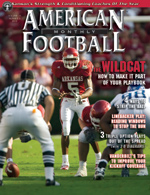
The Wildcat has evolved. The modern version of the single wing has surpassed the gimmick stage and blossomed into a game-changing weapon that is reportedly being used in some fashion by 80 percent of college and high school teams. The Wildcat even found a niche in the NFL, although its long-term viability at the professional level is still being debated. What’s not up for debate is the impact the Wildcat has on defenses. The formation, which dates back to Pop Warner in the 1890s, has many of the same benefits as its single wing ancestor, but is much more versatile. It slows down and spreads out defenses, making them more assignment-oriented, according to recently retired Kentucky head coach Rich Brooks. “It forces them to think instead of just reacting to the ball,” said Brooks, who played in the single wing at Oregon State for coach Tommy Prothro in the early 1960s. When used
Continue Reading
This article is available to American Football Quarterly subscribers.
Get instant digital access to this issue and the complete archive.
